


Whether you view him as a visionary or a controversial figure, it is impossible to ignore Elon Musk’s sheer manufacturing output. He has disrupted the global auto industry with Tesla and fundamentally altered the economics of space travel with SpaceX.
How does one person oversee the engineering of reusable rockets, mass-market EVs, and satellite mega-constellations simultaneously?
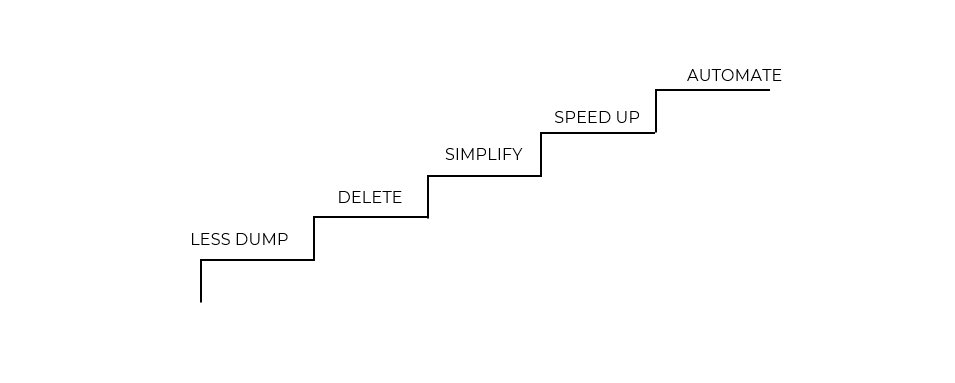
He uses a mental model he simply calls: “The Algorithm.”
Musk formalized this five-step engineering and design framework after suffering through the infamous “production hell” of the Tesla Model 3 [1]. During that time, he realized that traditional corporate engineering is fundamentally flawed. It is too slow, too bureaucratic, and too focused on adding layers rather than stripping them away.
As highlighted by Eric Jorgenson in The Book of Elon [2], The Algorithm isn’t just a quirky set of rules for building rockets. It is a universal framework for problem-solving, software development, and organizational design. If you want to move faster and build better things, here are the five steps.
Step 1: Make your requirements less dumb.
In most corporations, when a requirement is handed down by a manager, a legal team, or an expert, it is treated as the word of God. Musk argues this is incredibly dangerous.
His rule is simple: Assume all requirements are dumb. It does not matter who gave them to you. In fact, Musk notes that requirements given by “smart people” are the most dangerous kind, because people are significantly less likely to question them [1].
Every requirement must come with the name of the specific person who created it, not just a department. Why? Because you cannot interrogate a department [3]. If a requirement is slowing down a project, you need to be able to walk up to the specific person who wrote it and ask why it exists. Often, you will find that the requirement was created years ago to solve a problem that no longer exists.
Step 2: Delete the part or process.
Human beings have a massive cognitive bias toward addition [4]. When we encounter a problem, we instinctively want to add a feature, add a part, or add a management layer to solve it.
Musk demands the exact opposite: Delete.
If you do not absolutely need a part or a process, get rid of it. People are usually terrified of deleting things out of fear they might need them later. To combat this, Musk introduced a specific metric: If you are not forced to add back at least 10% of the parts you delete, you are not deleting enough [3].
If you occasionally have to halt production because you deleted a critical component, congratulations—you are pushing the boundaries of efficiency. If you never have to add anything back, you are playing it too safe and your product is bloated.
Step 3: Simplify or optimize.
Notice that this is step three, not step one. Musk frequently points out that the single most common error made by brilliant engineers is optimizing a part or a process that should not exist in the first place [1].
In traditional manufacturing, an engineer will be given a component and told to make it lighter, stronger, or cheaper. They will spend months optimizing it. A principal-minded engineer will step back and ask, “Why does this component exist at all? Can we delete it?”
Only after you have ruthlessly questioned the requirements (Step 1) and deleted every possible part (Step 2) are you allowed to optimize what is left.
Step 4: Accelerate cycle time.
Once you have a lean, optimized system, your next goal is to make it go faster. Cycle time is the amount of time it takes to get from the beginning of a process to the end.
If it takes a week to build a part, ask how it can be done in three days. If it takes three days, ask how it can be done in an hour. Speed is the ultimate competitive advantage in business. Faster cycle times mean faster feedback loops, which means faster innovation.
However, Musk warns that you must never accelerate cycle time until you have completed the first three steps. If you speed up a flawed, bloated process, you are simply digging your own grave at a faster pace [3].
Step 5: Automate.
This is the step Musk admits he got spectacularly wrong during the early days of Tesla. He tried to build an “alien dreadnought”—a fully automated factory operated almost entirely by robots. It was a disaster [5].
Why? Because he automated before he deleted, optimized, and accelerated. He spent millions of dollars and thousands of hours programming robots to perform tasks that humans could do better, or to build parts that shouldn’t have been in the car to begin with [1].
Automation is incredibly expensive and rigid. It should only be applied as the absolute final step. Once the requirements are perfect, the bloated parts are gone, the design is optimized, and the manual process is moving as fast as possible—then you bring in the machines to take over.
The Algorithm vs. The Toyota Production System (Lean)
If you study manufacturing history, you will quickly realize that Musk did not invent these concepts out of thin air. The Algorithm is essentially a hyper-aggressive, modern evolution of Lean Manufacturing and the Toyota Production System (TPS) [6].
The parallels are striking:
Muda (Waste): Musk’s obsession with deleting parts (Step 2) is the ultimate expression of eliminating Muda—Toyota’s term for any process that does not add value. Lean teaches that overprocessing and unnecessary inventory are the deadliest sins of production.
Takt Time and Flow: Accelerating cycle time (Step 4) is the direct equivalent of optimizing Takt time in TPS, ensuring that production flows continuously without bottlenecks or batching delays.
Jidoka (Automation with a human touch): When Musk attempted to fully automate the Model 3 line immediately, he violated a core tenet of Lean. Toyota famously resisted “dark factories” (factories run entirely by machines), insisting that humans must first perfect a manual process before a machine is ever brought in to automate it. Musk learned Toyota’s lesson the hard way, eventually arriving at the exact same conclusion: human optimization must precede automation.
The difference is velocity. While traditional Lean methodologies often rely on slow, incremental improvements (Kaizen) driven by committee, The Algorithm is applied with ruthless, top-down speed, prioritizing rapid iteration and a high tolerance for temporary failure.
The Takeaway
The beauty of “The Algorithm” is its brutal simplicity. It is an antidote to the natural corporate slide into bureaucracy and bloat.
Whether you are designing a physical product, writing a piece of software, or reorganizing a sales team, the human instinct is to add complexity. We create rules, we add steps, we build safety nets.
The next time you are faced with a complex project that feels bogged down, channel The Algorithm. Don’t ask what you need to add to fix it. Ask: Whose dumb requirement is this? What can we delete? And why on earth are we trying to automate a process that shouldn’t even exist?
Sources
[1] Dodd, T. (2021). Starbase Tour with Elon Musk. Everyday Astronaut.
[2] Jorgenson, E. (2024). The Book of Elon. Magrathea Publishing.
[3] Isaacson, W. (2023). Elon Musk. Simon & Schuster.
[4] Klotz, L. (2021). Subtract: The Untapped Science of Less. Flatiron Books.
[5] Musk, E. (2018). Excessive automation at Tesla was a mistake. To be precise, my mistake. Humans are underrated. Twitter.
[6] Womack, J. P., Jones, D. T., & Roos, D. (1990). The Machine That Changed the World. Rawson Associates.
Whether you view him as a visionary or a controversial figure, it is impossible to ignore Elon Musk’s sheer manufacturing output. He has disrupted the global auto industry with Tesla and fundamentally altered the economics of space travel with SpaceX.
How does one person oversee the engineering of reusable rockets, mass-market EVs, and satellite mega-constellations simultaneously?
He uses a mental model he simply calls: “The Algorithm.”
Musk formalized this five-step engineering and design framework after suffering through the infamous “production hell” of the Tesla Model 3 [1]. During that time, he realized that traditional corporate engineering is fundamentally flawed. It is too slow, too bureaucratic, and too focused on adding layers rather than stripping them away.
As highlighted by Eric Jorgenson in The Book of Elon [2], The Algorithm isn’t just a quirky set of rules for building rockets. It is a universal framework for problem-solving, software development, and organizational design. If you want to move faster and build better things, here are the five steps.
Step 1: Make your requirements less dumb.
In most corporations, when a requirement is handed down by a manager, a legal team, or an expert, it is treated as the word of God. Musk argues this is incredibly dangerous.
His rule is simple: Assume all requirements are dumb. It does not matter who gave them to you. In fact, Musk notes that requirements given by “smart people” are the most dangerous kind, because people are significantly less likely to question them [1].
Every requirement must come with the name of the specific person who created it, not just a department. Why? Because you cannot interrogate a department [3]. If a requirement is slowing down a project, you need to be able to walk up to the specific person who wrote it and ask why it exists. Often, you will find that the requirement was created years ago to solve a problem that no longer exists.
Step 2: Delete the part or process.
Human beings have a massive cognitive bias toward addition [4]. When we encounter a problem, we instinctively want to add a feature, add a part, or add a management layer to solve it.
Musk demands the exact opposite: Delete.
If you do not absolutely need a part or a process, get rid of it. People are usually terrified of deleting things out of fear they might need them later. To combat this, Musk introduced a specific metric: If you are not forced to add back at least 10% of the parts you delete, you are not deleting enough [3].
If you occasionally have to halt production because you deleted a critical component, congratulations—you are pushing the boundaries of efficiency. If you never have to add anything back, you are playing it too safe and your product is bloated.
Step 3: Simplify or optimize.
Notice that this is step three, not step one. Musk frequently points out that the single most common error made by brilliant engineers is optimizing a part or a process that should not exist in the first place [1].
In traditional manufacturing, an engineer will be given a component and told to make it lighter, stronger, or cheaper. They will spend months optimizing it. A principal-minded engineer will step back and ask, “Why does this component exist at all? Can we delete it?”
Only after you have ruthlessly questioned the requirements (Step 1) and deleted every possible part (Step 2) are you allowed to optimize what is left.
Step 4: Accelerate cycle time.
Once you have a lean, optimized system, your next goal is to make it go faster. Cycle time is the amount of time it takes to get from the beginning of a process to the end.
If it takes a week to build a part, ask how it can be done in three days. If it takes three days, ask how it can be done in an hour. Speed is the ultimate competitive advantage in business. Faster cycle times mean faster feedback loops, which means faster innovation.
However, Musk warns that you must never accelerate cycle time until you have completed the first three steps. If you speed up a flawed, bloated process, you are simply digging your own grave at a faster pace [3].
Step 5: Automate.
This is the step Musk admits he got spectacularly wrong during the early days of Tesla. He tried to build an “alien dreadnought”—a fully automated factory operated almost entirely by robots. It was a disaster [5].
Why? Because he automated before he deleted, optimized, and accelerated. He spent millions of dollars and thousands of hours programming robots to perform tasks that humans could do better, or to build parts that shouldn’t have been in the car to begin with [1].
Automation is incredibly expensive and rigid. It should only be applied as the absolute final step. Once the requirements are perfect, the bloated parts are gone, the design is optimized, and the manual process is moving as fast as possible—then you bring in the machines to take over.
The Algorithm vs. The Toyota Production System (Lean)
If you study manufacturing history, you will quickly realize that Musk did not invent these concepts out of thin air. The Algorithm is essentially a hyper-aggressive, modern evolution of Lean Manufacturing and the Toyota Production System (TPS) [6].
The parallels are striking:
Muda (Waste): Musk’s obsession with deleting parts (Step 2) is the ultimate expression of eliminating Muda—Toyota’s term for any process that does not add value. Lean teaches that overprocessing and unnecessary inventory are the deadliest sins of production.
Takt Time and Flow: Accelerating cycle time (Step 4) is the direct equivalent of optimizing Takt time in TPS, ensuring that production flows continuously without bottlenecks or batching delays.
Jidoka (Automation with a human touch): When Musk attempted to fully automate the Model 3 line immediately, he violated a core tenet of Lean. Toyota famously resisted “dark factories” (factories run entirely by machines), insisting that humans must first perfect a manual process before a machine is ever brought in to automate it. Musk learned Toyota’s lesson the hard way, eventually arriving at the exact same conclusion: human optimization must precede automation.
The difference is velocity. While traditional Lean methodologies often rely on slow, incremental improvements (Kaizen) driven by committee, The Algorithm is applied with ruthless, top-down speed, prioritizing rapid iteration and a high tolerance for temporary failure.
The Takeaway
The beauty of “The Algorithm” is its brutal simplicity. It is an antidote to the natural corporate slide into bureaucracy and bloat.
Whether you are designing a physical product, writing a piece of software, or reorganizing a sales team, the human instinct is to add complexity. We create rules, we add steps, we build safety nets.
The next time you are faced with a complex project that feels bogged down, channel The Algorithm. Don’t ask what you need to add to fix it. Ask: Whose dumb requirement is this? What can we delete? And why on earth are we trying to automate a process that shouldn’t even exist?
Sources
[1] Dodd, T. (2021). Starbase Tour with Elon Musk. Everyday Astronaut.
[2] Jorgenson, E. (2024). The Book of Elon. Magrathea Publishing.
[3] Isaacson, W. (2023). Elon Musk. Simon & Schuster.
[4] Klotz, L. (2021). Subtract: The Untapped Science of Less. Flatiron Books.
[5] Musk, E. (2018). Excessive automation at Tesla was a mistake. To be precise, my mistake. Humans are underrated. Twitter.
[6] Womack, J. P., Jones, D. T., & Roos, D. (1990). The Machine That Changed the World. Rawson Associates.