


Look at any elite performer in the world. Michael Jordan had Phil Jackson. Serena Williams had Patrick Mouratoglou. Simone Biles has Cécile and Laurent Landi.
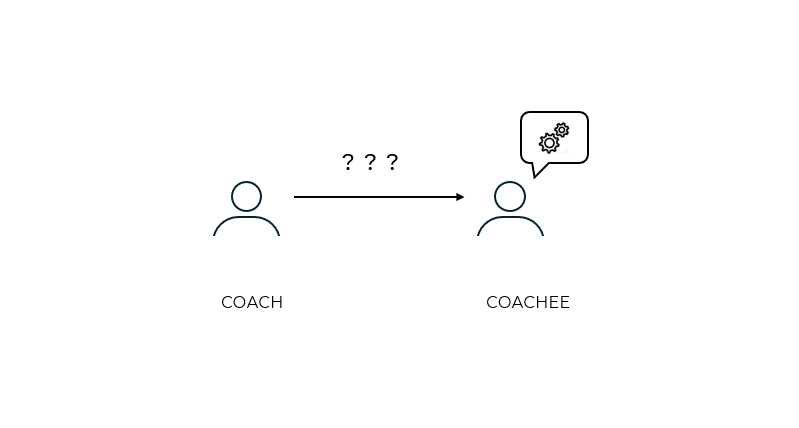
We accept without question that elite athletes need coaches to reach their potential. Yet, it’s a strange paradox in the corporate world: we expect our business leaders to simply know how to lead the moment they get a promotion.
We take our best engineers, salespeople, and operators, give them a “Manager” title, and assume they will automatically bring out the best in their teams. But managing and coaching are entirely different skill sets.
A manager ensures the work gets done. A coach ensures the person doing the work gets better.
If you want to build a resilient, high-performing team, you have to transition from being a boss who hands out solutions to a coach who builds capacity. But how exactly do you do that?
Let’s look at the psychology of executive coaching, the mindset shift of powerful questioning, and the legendary framework used by Toyota to build the best problem-solvers in the world.
The “Adding Too Much Value” Trap
Marshall Goldsmith is arguably the most famous executive coach in the world, having advised the CEOs of Ford, Pfizer, and Best Buy. You might assume he gives them brilliant, complex strategic advice. He doesn’t.
In his classic book, What Got You Here Won’t Get You There, Goldsmith points out a fatal flaw in highly successful leaders: The disease of adding too much value. [1]
Imagine a team member comes to you with a solid idea. Because you are the boss, you instinctively want to improve it to show your expertise. You say, “Great idea, but what if we also did X?”
Congratulations. You just improved the content of the idea by 5%, but you destroyed the employee’s commitment to it by 50%. It’s no longer their idea; it’s your idea.
Goldsmith teaches that the best coaches know when to bite their tongues. Their primary job isn’t to show how smart they are; it’s to facilitate the growth of the person sitting in front of them.
Change Your Questions, Change Your Team
If a coach isn’t supposed to give answers, what exactly are they supposed to do? They ask questions. But not just any questions.
In her brilliant book Change Your Questions, Change Your Life, Dr. Marilee Adams introduces the concept of the “Choice Map.” She argues that when facing a problem, leaders naturally default to one of two mindsets: The Judger or The Learner. [2]
Judger Questions look for blame and trigger defensiveness: “Why did this happen? Whose fault is it? Why can’t they get it right?”
Learner Questions look for truth and foster growth: “What happened? What are the facts? What are our options? What can we learn?”
When a boss asks Judger questions, the team learns to hide mistakes and play it safe. When a coach asks Learner questions, the team turns into scientists, running experiments to find the truth.
But how do you make “Learner Questions” a daily, repeatable habit instead of just a nice theory? You need a system.
The Toyota Coaching Kata: Muscle Memory for the Mind
Toyota’s legendary success isn’t just about assembly lines or supply chains. It is based on a core philosophy: Toyota doesn’t just build cars; they build people.
To build people, they use the Coaching Kata, a framework formally decoded by researcher Mike Rother. [3] In martial arts, a kata is a routine practiced thousands of times until it becomes muscle memory. Toyota applied this to business. They realized managers needed a strict, choreographed script to prevent them from slipping back into “Judger” mode or giving away the answers.
At Toyota, the coaching cycle happens daily, often taking less than 10 minutes. The Coach carries a small printed card and uses a highly specific sequence of questions.
Here is the exact framework. Notice how it acts as the ultimate “Learner Mindset” script:
1. What is the Target Condition?
(Where are we trying to go?) This grounds the conversation in the ultimate goal, pulling the Learner out of the weeds of immediate firefighting.
2. What is the Actual Condition now?
(Where are we today?) The Coach demands facts and data here—not assumptions, emotions, or blame.
🛑 THE CRITICAL REFLECTION PHASE
(Here is where the magic happens. The Coach literally flips the Kata card over to ask four reflection questions about the Learner’s previous actions. This is the core of the scientific method.)
What was your last step?
What did you expect to happen?
What actually happened?
What did you learn?
Insight: This reflection phase builds immense psychological safety. If an experiment fails, the Coach doesn’t punish the Learner. The only actual failure is failing to learn from what happened.
(The Coach flips the card back to the front)
3. What Obstacles are preventing you from reaching the Target Condition? Which one are you addressing now?
The Learner might have a list of 10 problems. The Coach forces them to pick just one. Focus prevents overwhelm and isolates variables for the next experiment.
4. What is your Next Step? (And what do you expect to happen?)
The Learner proposes a new hypothesis. Again, the Coach does not say, “No, do this instead.” As long as the step won’t damage the company or injure someone, the Coach lets the Learner proceed. Experience is the best teacher.
5. How quickly can we go and see what we have learned from taking that step?
This shrinks the feedback loop. Not next quarter. Not next month. Can we check back this afternoon? Tomorrow morning?
The Ultimate Leadership Shift
Look closely at the Toyota Coaching Kata. There is no room for Marshall Goldsmith’s “adding too much value.” There is no room for Marilee Adams’s “Judger” mindset.
It is a pure, rigorous discipline of guiding another human being through the scientific method.
When you use this framework, you stop being the bottleneck for your team. You stop carrying the exhausting mental burden of having to solve every single problem yourself. Instead, you build a team of autonomous, confident, critical thinkers.
If you want to be a better leader this week, try an experiment. Write the Kata questions on an index card. The next time a team member comes to you with a problem, fight every instinct in your body to give them the answer.
Instead, ask: “What is the actual condition right now? And what did we learn from our last step?”
Change your questions, and you will change your team.
Over to you: Which mindset do you see more often in your workplace: The Judger or the Learner? Have you ever tried structured questioning like the Kata? Share your experiences in the comments! 👇
(Enjoyed this deep dive? Subscribe to get these insights delivered straight to your inbox every week.)
📚 Sources & Further Reading
[1] Marshall Goldsmith, What Got You Here Won’t Get You There: How Successful People Become Even More Successful. (Explores the behavioral flaws of successful leaders, emphasizing the trap of “adding too much value” and stifling team ownership).
[2] Marilee Adams, Ph.D., Change Your Questions, Change Your Life: 12 Powerful Tools for Leadership, Coaching, and Life. (Introduces the Choice Map and the critical organizational difference between the Judger and Learner mindsets).
[3] Mike Rother, Toyota Kata: Managing People for Improvement, Adaptiveness and Superior Results. (The definitive guide that decoded Toyota’s management routines into the highly structured Improvement Kata and Coaching Kata).