


Imagine a leader working 60-hour weeks. Their calendar is wall-to-wall with syncs, their inbox is constantly refreshed, and they respond to approvals within minutes, even late into the evening. By traditional corporate metrics, they are a heroic model of dedication.
Yet, ask the team why projects are slipping, and the answer is almost always the same, spoken in hushed tones:
“We’re waiting on sign-off.”
“We need their feedback before we can proceed.”
“It’s sitting on their desk.”
Despite their tireless effort, this leader has committed the cardinal sin of modern organizational design: they have become the single point of failure [1].
In high-performing organizations, teams are no longer structured like rigid pyramids; they behave like dynamic, interconnected networks [2]. Information, ideas, and execution must flow freely between nodes. When a network slows down, the culprit is rarely a lack of individual talent or effort.
The culprit is a bottleneck. And far too often, the bottleneck wears the leader’s hat.
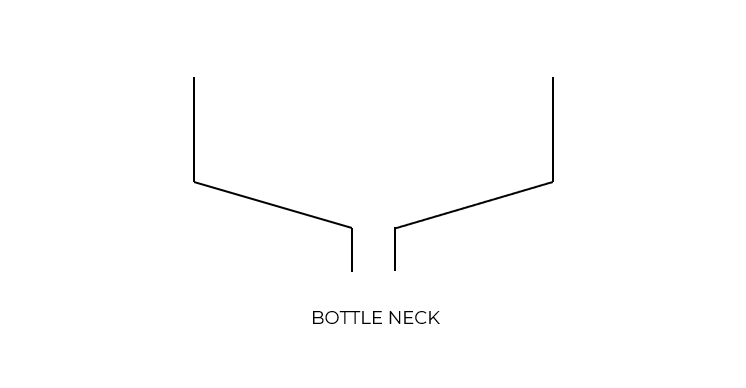
The Law of the Constraint: Why Effort Doesn’t Equal Speed
In his seminal work The Goal, Eliyahu M. Goldratt introduced the Theory of Constraints: Any manageable system is limited in achieving more of its goals by a very small number of constraints [3].
In manufacturing, if Machine C can only process 10 units an hour, it does not matter if Machines A and B can process 1,000 units an hour. The throughput of the entire factory is strictly governed by Machine C. Improving anything other than the constraint is an illusion of progress [3].
Knowledge work operates under the exact same physics.
High-performing teams understand that optimization is not about making individuals type faster or attend more status syncs. It is about relentlessly hunting down constraints across the value stream [4].
When you map the lifecycle of a software release, a marketing campaign, or a strategic initiative, where does work spend most of its time? In lean management studies, it is rarely in active development; it spends up to 80–90% of its lifecycle simply waiting [4]:
Waiting for architecture review.
Waiting for budget sign-off.
Waiting for a 30-minute slot on an executive calendar three weeks out.
When decisions, context, and permissions are centralized at the top, the leader’s cognitive bandwidth becomes the hard ceiling on the entire network’s throughput [2, 3].
The Anatomy of an Accidental Bottleneck
Leaders rarely set out to slow their teams down. Becoming a bottleneck is almost always born out of good intentions:
The Quality Trap: “If I don’t review this, standards will drop.” The desire to ensure excellence morphs into an insistence on micromanaging execution details.
The Context Moat: Leaders sit in cross-functional meetings, absorb executive strategy, and unintentionally hoard context. The team cannot act autonomously simply because they lack the background required to make the right call [5].
The Approval Comfort Blanket: Employees learn that running decisions by the boss transfers risk. If an initiative fails, it is the leader’s failure, not theirs. Centralized decision-making systematically breeds learned helplessness.
When a leader acts as an operational gatekeeper, they force a distributed network to route all traffic through a single, congested pipeline. Latency, lost momentum, and friction are inevitable [2].
From Gatekeeper to Network Engineer: How to Step Aside
If your goal is to build an adaptable, self-healing network, your primary role changes. You are no longer the operator pulling levers. You are the network engineer optimizing bandwidth and routing [2].
Here is how leaders deliberately design themselves out of the critical path:
1. Shift from Control to Context
As former Netflix CEO Reed Hastings documented, the most agile cultures operate by leading with context, not control [5]. If you find yourself frequently stepping in to correct decisions, your instinct might be to introduce another approval stage. The disciplined response is the opposite: ask yourself, “What context did the team lack that led them to that conclusion?” When leaders provide radical clarity around objectives, trade-offs, constraints, and metrics, the team can reach the same sound decisions independently [5].
2. Differentiate Reversible vs. Irreversible Decisions
In his 2015 letter to shareholders, Jeff Bezos outlined the distinction between Type 1 and Type 2 decisions [6]:
Type 1 (One-Way Doors): Irreversible, high-consequence decisions that require slow, deliberate evaluation.
Type 2 (Two-Way Doors): Reversible decisions that can be quickly unwound if proven wrong.
Most organizations mistakenly treat every decision as a Type 1 decision. To eliminate yourself as a bottleneck, establish a clear operating principle: leaders should only be the primary decision-makers for irreversible, existential choices. If a decision is reversible, authority must be delegated directly to the teams closest to the work [6].
3. Define “Commander’s Intent”
Borrowed from military doctrine and popularized in organizational strategy, Commander’s Intent defines the desired end-state of an operation—the what and the why—while leaving the how to operators on the ground [7, 8]. General Stanley McChrystal described this in Team of Teams as shifting from controlling execution to empowering execution through shared consciousness [2]. When obstacles appear, a team operating under Commander’s Intent does not freeze to await new orders; they dynamically adjust tactics toward the objective [7, 8].
4. Asynchronous Default, Synchronous Exception
If progress halts until you can attend a 45-minute calendar invite, the workflow is broken. Modern organizational networks thrive on asynchronous transparency. Encourage teams to use lightweight, structured proposals (such as Request for Comments / RFCs) accompanied by a default-action clause: “We plan to proceed with this approach by Thursday at 3:00 PM unless critical objections are raised.” This shifts the default organizational state from halted to moving.
The Ultimate Diagnostic: The Vacation Test
There is a straightforward diagnostic to test whether you are a bottleneck to your organization:
What happens to your team’s velocity and execution if you disappear for two weeks with zero internet access? [1]
If work grinds to a halt, key initiatives stall, and your team spends the fortnight in an uneasy holding pattern, you have not built a resilient team. You have built an administrative dependency.
Conversely, if the network continues to route around friction, close loops, and ship value—perhaps even moving faster without your interruptions—you have succeeded in designing a self-sustaining system [1, 2].
The Measure of True Leadership Throughput
In the industrial age, a manager’s importance was often measured by how many decisions passed across their desk. In the modern knowledge economy, that dynamic is a flaw in organizational architecture.
High-performing teams require ruthless, continuous attention to constraints [3]. And often, the single most impactful bottleneck a leader will ever remove is themselves.
Your ultimate impact is not measured by the decisions you personally make. It is measured by the velocity, clarity, and autonomy of the network you leave behind.
References & Further Reading
Kim, G., Behr, K., & Spafford, G. (2013). The Phoenix Project: A Novel about IT, DevOps, and Helping Your Business Win. IT Revolution Press. (Illustrates how centralized knowledge in a single critical person—the “Brent” phenomenon—creates an existential operational bottleneck).
McChrystal, S., Collins, T., Silverman, D., & Fussell, C. (2015). Team of Teams: New Rules of Engagement for a Complex World. Portfolio/Penguin. (Examines the transition from traditional top-down hierarchies to adaptable operational networks and the leadership shift toward “eyes on, hands off”).
Goldratt, E. M., & Cox, J. (1984). The Goal: A Process of Ongoing Improvement. North River Press. (Introduced the Theory of Constraints, establishing that system throughput is dictated entirely by its primary bottleneck).
Womack, J. P., & Jones, D. T. (1996). Lean Thinking: Banish Waste and Create Wealth in Your Corporation. Simon & Schuster. (Details value stream mapping and the reduction of queue/wait times versus active processing time).
Hastings, R., & Meyer, E. (2020). No Rules Rules: Netflix and the Culture of Reinvention. Penguin Press. (Defines the leadership framework of “leading with context, not control” to build high-autonomy teams).
Bezos, J. (2016). 2015 Letter to Shareholders. Amazon.com, Inc. (Introduced the Type 1 and Type 2 decision-making framework to avoid organizational paralysis).
Department of the Army. (2019). ADP 6-0: Mission Command: Command and Control of Army Forces. Washington, DC: Headquarters, Department of the Army. (Defines Commander’s Intent as a mechanism for decentralized operational execution).
Heath, C., & Heath, D. (2007). Made to Stick: Why Some Ideas Survive and Others Die. Random House. (Analyzes the organizational application of Commander’s Intent to prevent plan failure in volatile environments).